
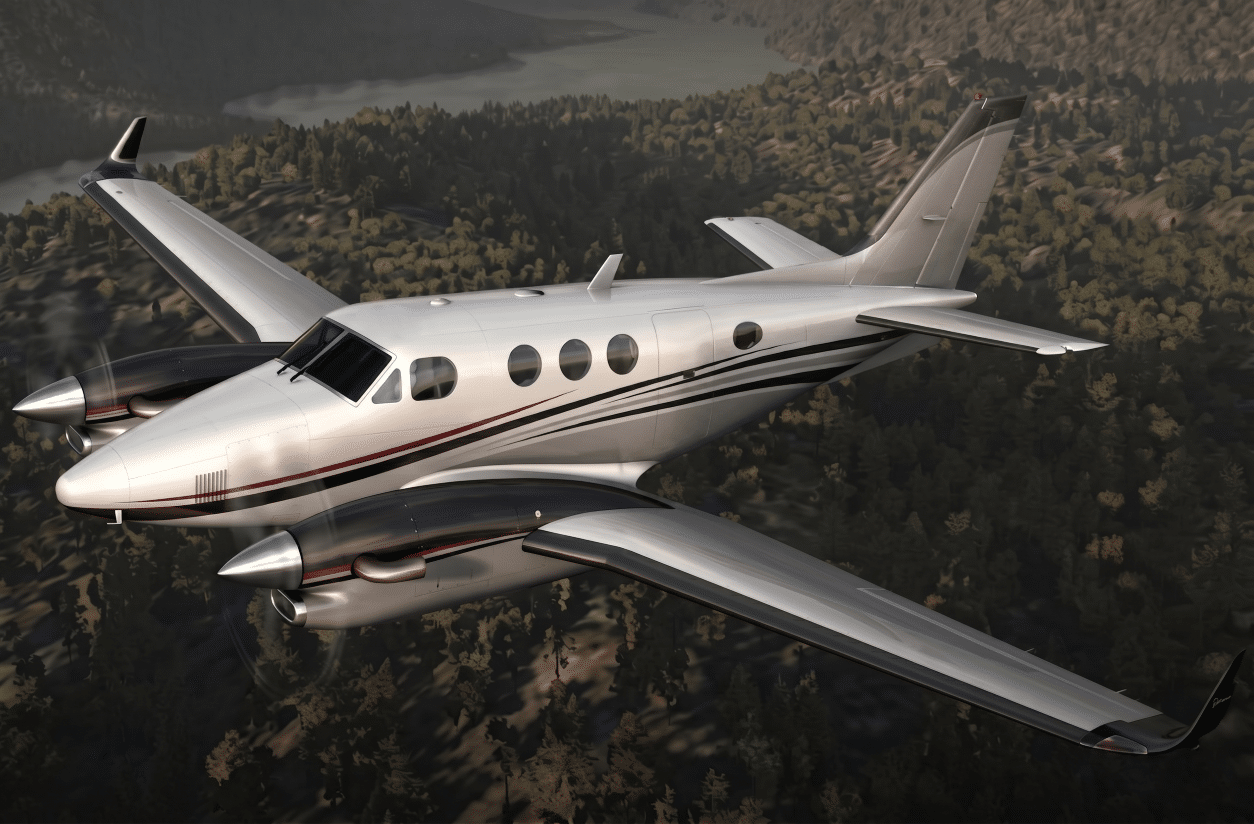
King Air 90
Introduced in 1964 as the first aircraft in what would become the most successful turboprop family in aviation history, the King Air 90 was built on the Queen Air airframe with turboprop engines and a pressurized cabin. Over 20 variants followed across six decades of production. It seats up to six passengers with a range of around 1,000 nautical miles.
King Air 90
Where the King Air Story Begins
How It All Started
Every King Air that followed — the 100, the 200, the 350 — traces its lineage back to the 90. Introduced in 1964 as the first pressurized twin-turboprop of its kind, it set the template for what a practical, reliable regional turboprop could look like. Nothing comparable existed at the time. Over 3,000 of the 90 and 100 series models were delivered in the decades that followed, and the platform proved dependable enough that a version of it once served in the Air Force One fleet.
For anyone booking a King Air 90 charter today, it makes the most sense on regional legs where the journey is straightforward and the place you are going matters more than how you get there. Compared to the King Air 200, it carries fewer passengers over a shorter range, but for a small group on a tight regional route, that is exactly the point — less aircraft, lower cost, same reliability. A small team flying from Fort Lauderdale to Palm Beach for a day of meetings, or a couple heading somewhere commercial service cannot reach without a connection, will find the 90 handles both without any excess. Celebrity Jet Charter matches the right aircraft to the route and coordinates all logistics around the itinerary, so the only thing passengers need to think about is what comes after landing.
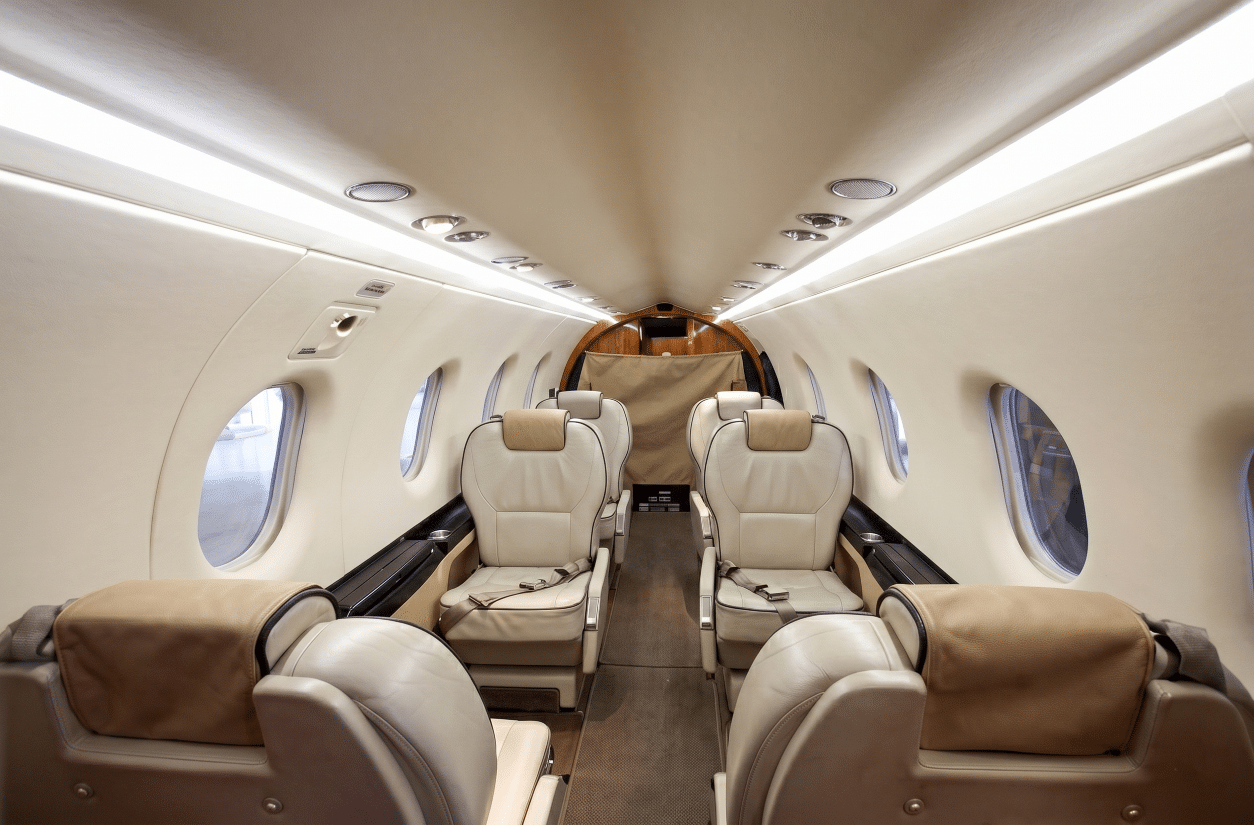
Inside, up to six passengers sit in a club-style arrangement in a pressurized, climate-controlled cabin. Luggage is accessible during the flight, the aircraft cruises above most weather at 29,000 feet, and compact runways are simply not an issue. A King Air 90 rental is often the most practical choice for exactly this kind of travel: quick, direct, and as close to where you need to be as possible. Sixty years after Beechcraft first delivered it, very little has changed about why people keep booking it.
These aircraft are operated by experienced crews who know the King Air 90 platform and the airports and conditions it was built to serve.
Manufacturer: King Air
Model: King Air C90GTx
Passengers (Typical): 7
Passengers (Max): 7
Pilots: 2
Range: 1219 nm
High Speed Cruise: 270 mph
Cabin Length: 12.40 ft.
Cabin Width: 4.5 ft.
Cabin Height: 4.8 ft.
Baggage Capacity (Interior): 0 cu ft.
Baggage Capacity (Exterior): 48 cu ft.
Max Takeoff Weight: 10,100 lbs
Service Ceiling: 30,000 ft.
Landing Distance: 4,007 ft.
Number Built: 100
Year Started: 2006
Year Ended: 2007
Turbo Prop Jets
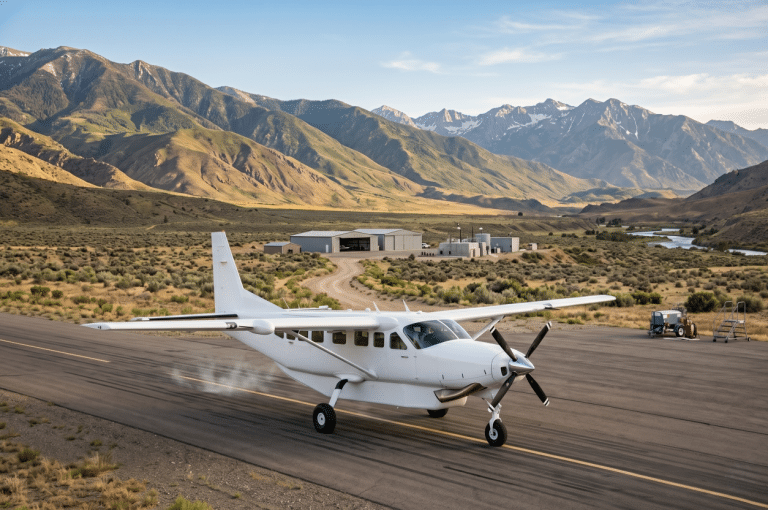
Cessna Grand Caravan EX
With strong payload capability, simple operation, and access to short or rough runways, the Grand Caravan EX is a practical choice for regional private flights, island routes, and utility travel.
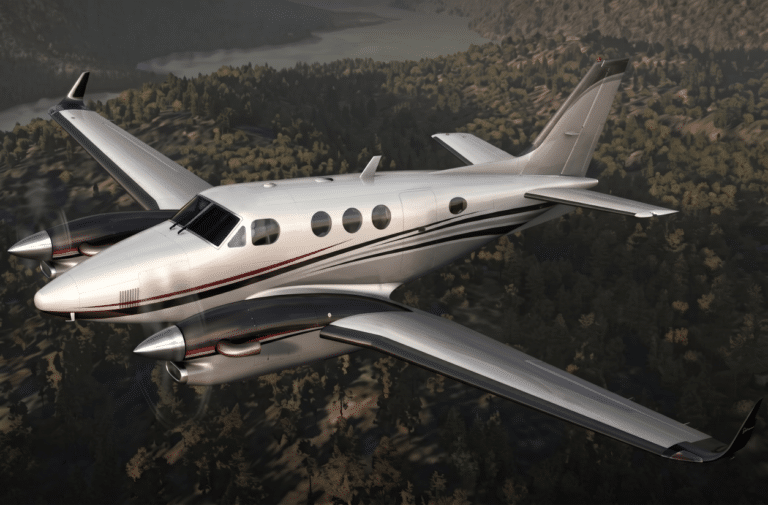
King Air 90
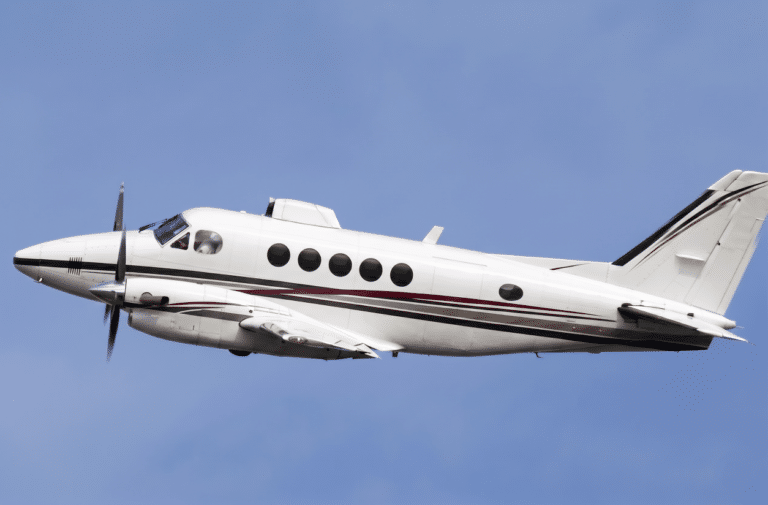
Introduced in 1964 as the first aircraft in what would become the most successful turboprop family in aviation history, the King Air 90 was built on the Queen Air airframe with turboprop engines and a pressurized cabin. Over 20 variants followed across six decades of production. It seats up to six passengers with a range of around 1,000 nautical miles.
King Air 100
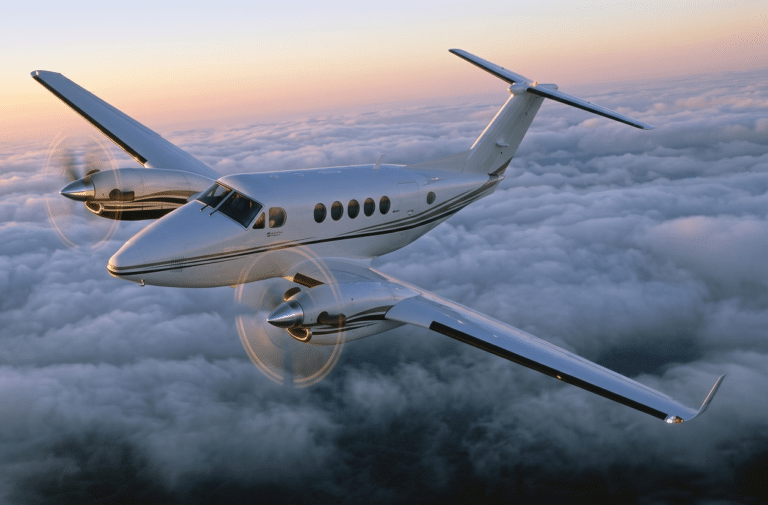
Introduced in 1969 as the first stretched King Air, the Model 100 extended the cabin of the King Air 90 by four feet and fitted a new wing derived from the Model 99 airliner. Three variants followed — the 100, A100, and B100 — each with refinements to engines, propellers, and performance. The aircraft seats up to eight passengers with a range of around 1,325 nautical miles.
King Air 200
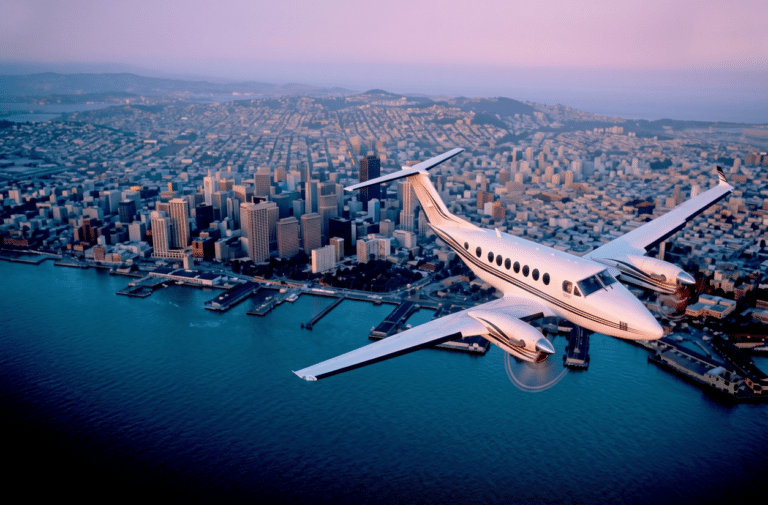
Originally launched as the Super King Air in 1974, the Model 200 brought a new T-tail, longer wingspan, and more powerful engines to the King Air line. The B200 variant followed with even stronger PT6A-42 engines and lower operating costs. Both variants seat up to eight passengers with a range of around 1,750 nautical miles.
King Air 300 / 350
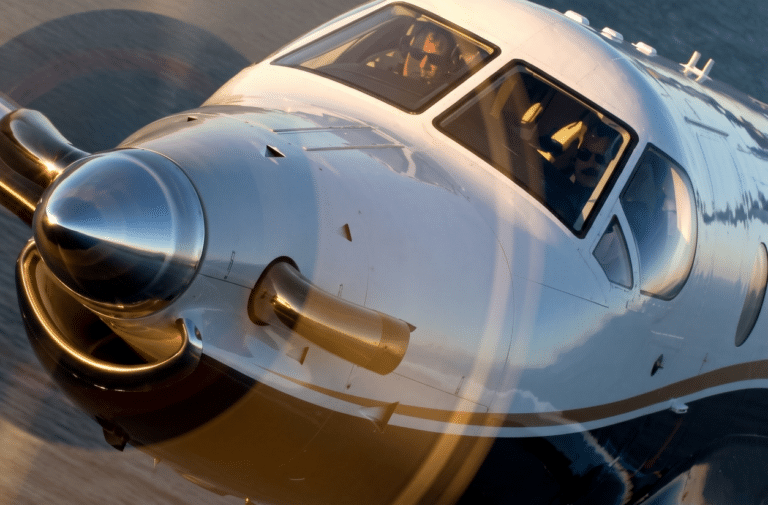
Entering service in 1984 as a more powerful successor to the 200, the King Air 300 brought stronger PT6A-60A engines and a cleaner airframe. Six years later, a stretched fuselage, winglets, and four extra cabin windows produced the 350. By 2009, the 350i had pushed noise levels and cabin comfort to a point where Beechcraft felt confident comparing them to light jets.
Pilatus PC-12
Built in Switzerland and first delivered in 1994, the Pilatus PC-12 is the world’s best-selling pressurized single-engine turboprop with over 1,750 sold globally. The interior was designed in collaboration with BMW Designworks. It seats up to nine passengers, requires as little as 1,475 feet of runway for takeoff, and carries a range of around 1,800 nautical miles.
Seamless Booking Process

Submit Request

Select Aircraft

Confirm Details

Fly Private