
King Air 200
Originally launched as the Super King Air in 1974, the Model 200 brought a new T-tail, longer wingspan, and more powerful engines to the King Air line. The B200 variant followed with even stronger PT6A-42 engines and lower operating costs. Both variants seat up to eight passengers with a range of around 1,750 nautical miles.
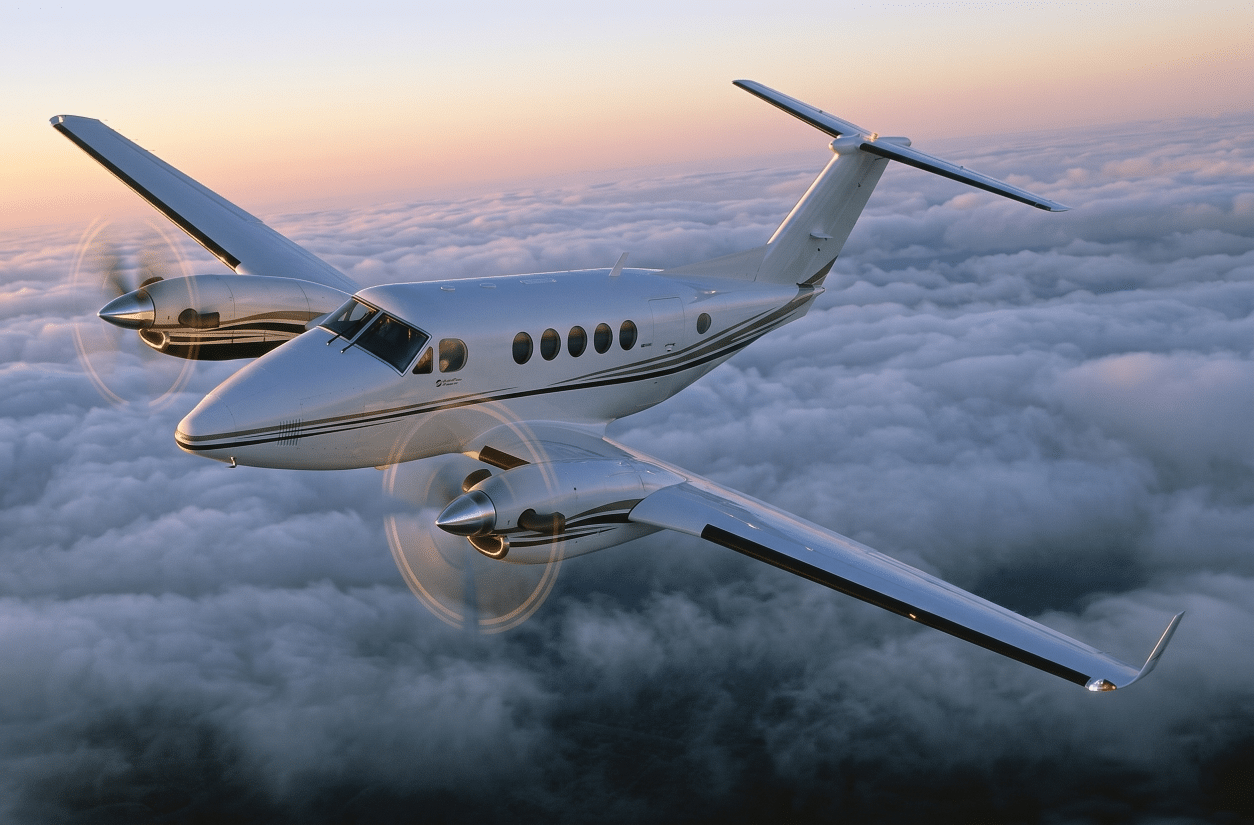
King Air 200
The Most Popular Turboprop Ever Built, for Good Reason
Over 2,000 King Air 200s have been delivered since 1974. That number is not a coincidence. It reflects five decades of operators, pilots, and passengers choosing this aircraft over every other turboprop on the market — repeatedly, consistently, and across every imaginable mission.
The case for a King Air 200 charter starts with access. On a 500-mile trip, the time difference between this aircraft and a comparably sized jet is around 20 to 30 minutes door to door. What the King Air 200 offers in exchange is the ability to land somewhere the jet cannot — shorter runways, unimproved strips, noise-restricted airports, and destinations that simply do not appear on a jet’s operational map. For many trips, the airport that works for the King Air 200 is considerably closer to the final destination than the nearest jet-capable field.
The cabin seats up to eight comfortably. Beechcraft fitted electronically tuned vibration absorbers specifically to reduce propeller noise inside, and the result is a quieter interior than most passengers expect from a turboprop. Seats swivel and recline, there is an enclosed lavatory, and the pressurized cabin sits comfortably at altitude for the duration of the flight. The aircraft is also certified to fly into known icing conditions and has been adapted by the US military as the C-12 Huron — two endorsements of the platform’s reliability that speak for themselves.
For a family heading to Naples from Charlotte — somewhere a commercial connection cannot reach directly — or a small team that needs to be in two cities in one day without the cost of a jet, the King Air 200 makes the trip possible in a way most aircraft cannot. Celebrity Jet Charter coordinates aircraft availability and ground logistics to match the itinerary. These aircraft are operated by experienced crews whose familiarity with the King Air platform runs deep.
Manufacturer: King Air
Model: King Air 200
Passengers (Typical): 8
Passengers (Max): 8
Pilots: 2
Range: 636 nm
High Speed Cruise: 292 mph
Cabin Length: 16.70 ft.
Cabin Width: 4.8 ft.
Cabin Height: 4.5 ft.
Baggage Capacity (Interior): 0 cu ft.
Baggage Capacity (Exterior): 55 cu ft.
Max Takeoff Weight: 12,500 lbs
Service Ceiling: 35,000 ft.
Landing Distance: 4,625 ft.
Number Built: 0
Year Started: 1970
Year Ended: 0

Turbo Prop Jets
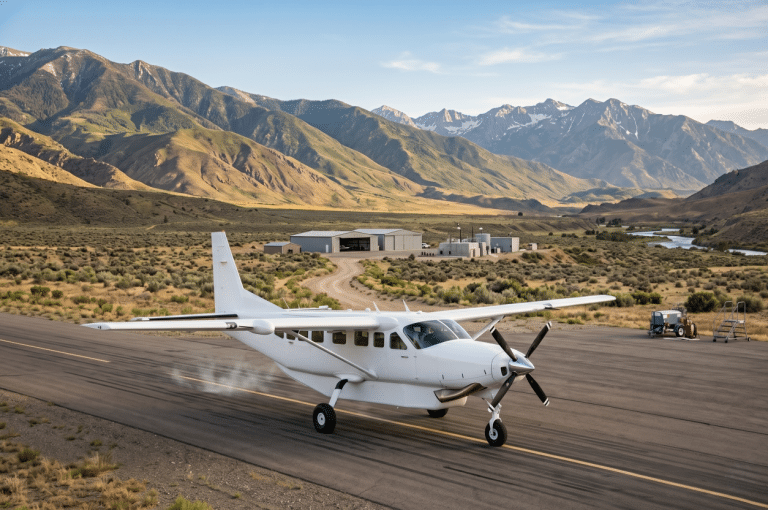
Cessna Grand Caravan EX
With strong payload capability, simple operation, and access to short or rough runways, the Grand Caravan EX is a practical choice for regional private flights, island routes, and utility travel.
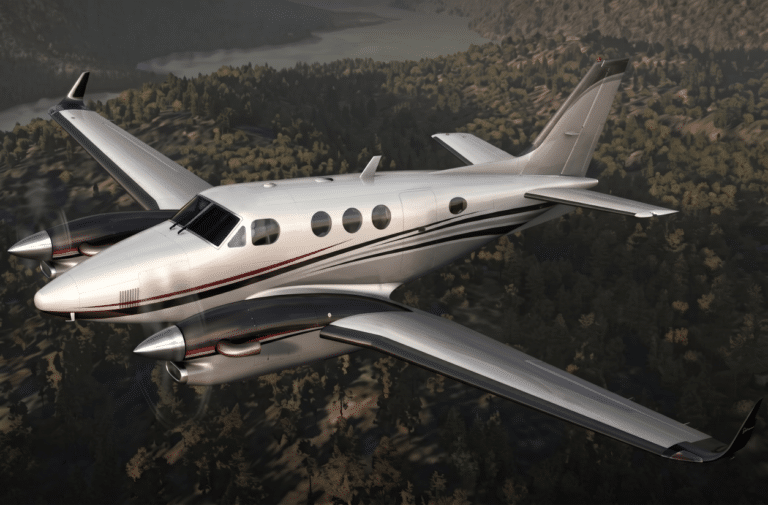
King Air 90
Introduced in 1964 as the first aircraft in what would become the most successful turboprop family in aviation history, the King Air 90 was built on the Queen Air airframe with turboprop engines and a pressurized cabin. Over 20 variants followed across six decades of production. It seats up to six passengers with a range of around 1,000 nautical miles.
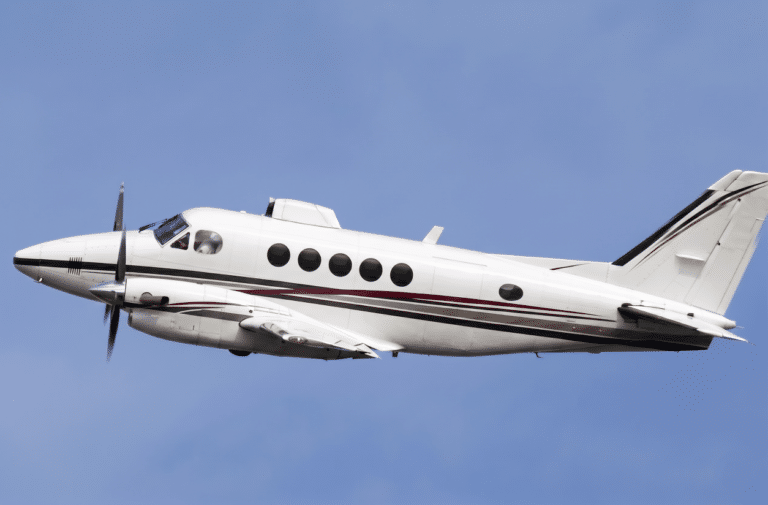
King Air 100
Introduced in 1969 as the first stretched King Air, the Model 100 extended the cabin of the King Air 90 by four feet and fitted a new wing derived from the Model 99 airliner. Three variants followed — the 100, A100, and B100 — each with refinements to engines, propellers, and performance. The aircraft seats up to eight passengers with a range of around 1,325 nautical miles.
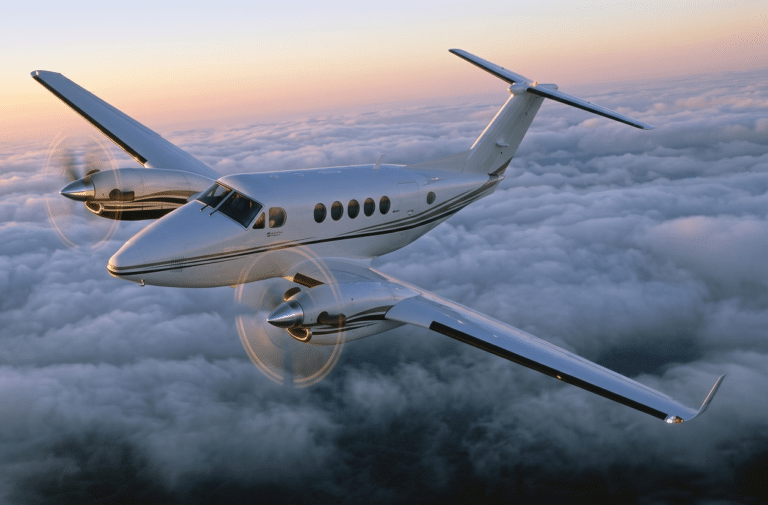
King Air 200
Originally launched as the Super King Air in 1974, the Model 200 brought a new T-tail, longer wingspan, and more powerful engines to the King Air line. The B200 variant followed with even stronger PT6A-42 engines and lower operating costs. Both variants seat up to eight passengers with a range of around 1,750 nautical miles.
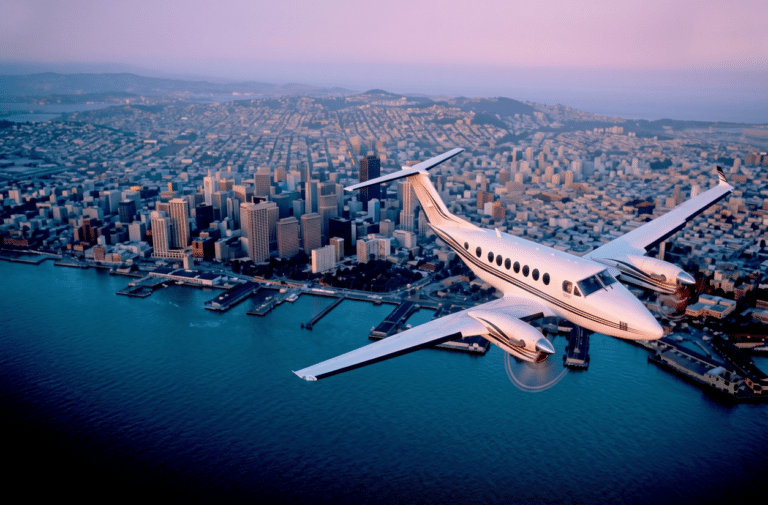
King Air 300 / 350
Entering service in 1984 as a more powerful successor to the 200, the King Air 300 brought stronger PT6A-60A engines and a cleaner airframe. Six years later, a stretched fuselage, winglets, and four extra cabin windows produced the 350. By 2009, the 350i had pushed noise levels and cabin comfort to a point where Beechcraft felt confident comparing them to light jets.
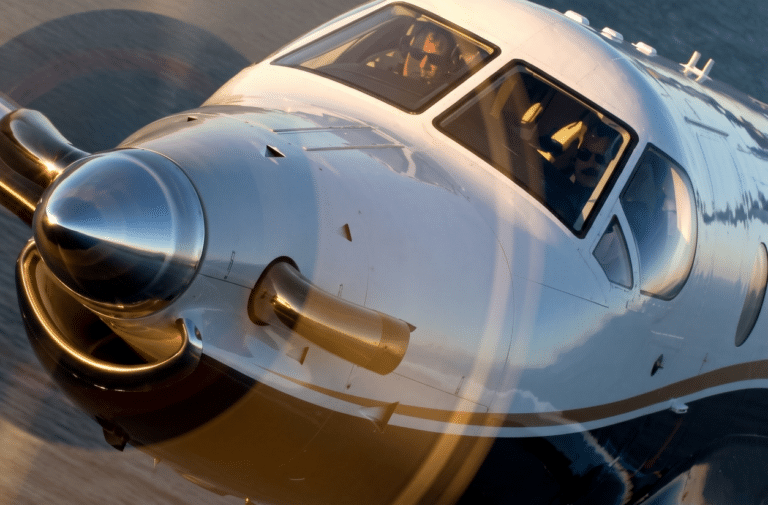
Pilatus PC-12
Built in Switzerland and first delivered in 1994, the Pilatus PC-12 is the world’s best-selling pressurized single-engine turboprop with over 1,750 sold globally. The interior was designed in collaboration with BMW Designworks. It seats up to nine passengers, requires as little as 1,475 feet of runway for takeoff, and carries a range of around 1,800 nautical miles.
Seamless Booking Process

Submit Request

Select Aircraft

Confirm Details

Fly Private