
Turbo Prop Jet
Turbo Prop aircraft is recommended for up to 9 passengers and has a range generally between 1,000–1,800 miles. Typical airspeeds range from 300 mph to 400 mph.
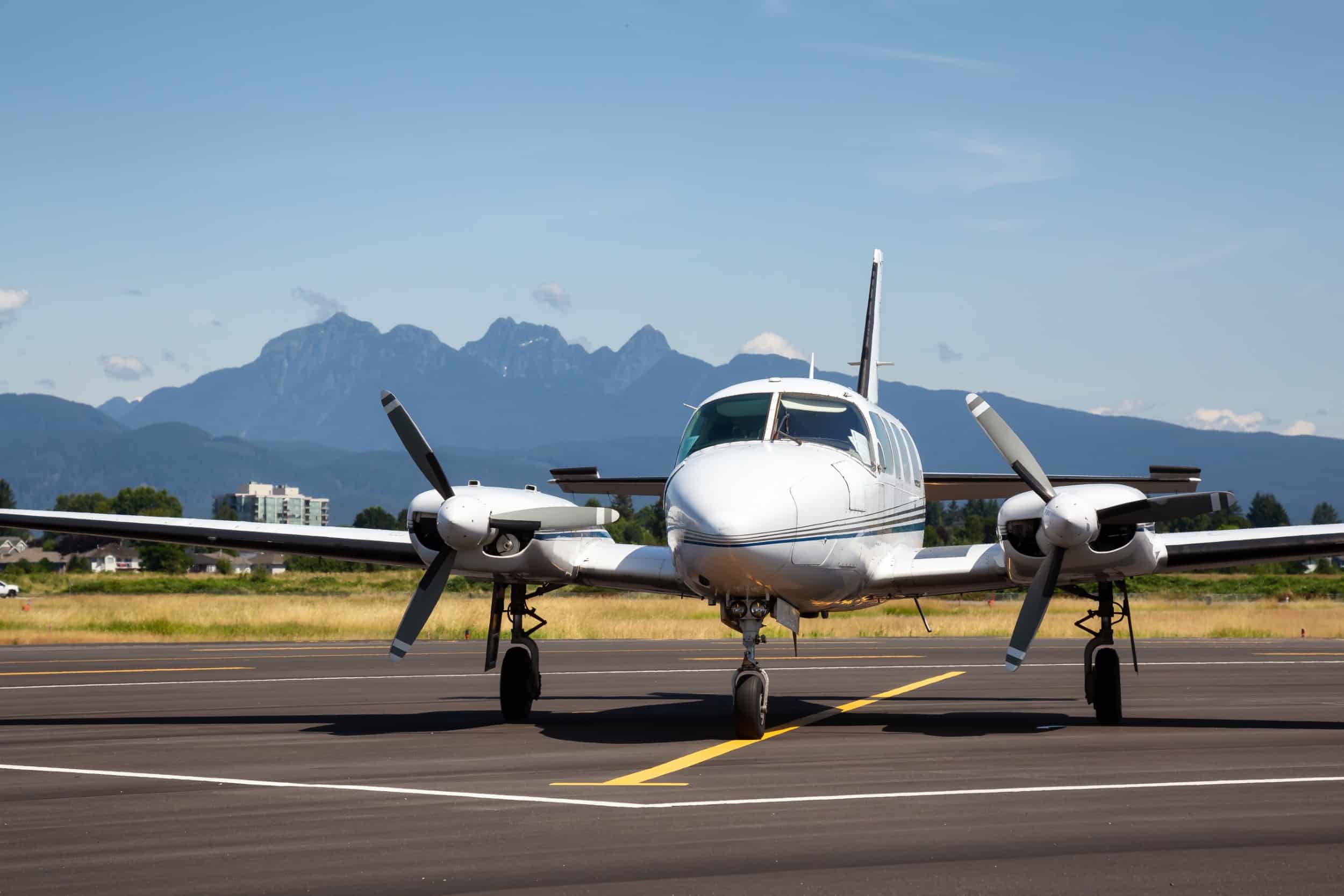
Closer Than Any Jet Can Get
Private aviation has a speed obsession. More knots, higher altitude, longer range. It is easy to understand why jets dominate the conversation. What gets missed in that conversation is that speed between airports is only one part of the equation, and on the routes where turboprops operate, it is rarely the deciding factor.
A turboprop charter is a different kind of aircraft for a different kind of trip. The passengers who fly them regularly are not settling for less. They have done the math. On legs under 500 miles, the door-to-door time between a turboprop using a small regional airport and a jet flying into the nearest major hub is often identical, and sometimes the shorter route wins. The difference is that the turbine aircraft lands closer, at airports that jets cannot reach at all.
The numbers behind this are straightforward. Jets require runways of at least 5,000 feet to operate safely. Most turboprops need around 3,200 feet. That gap opens up roughly 40% more airports across North America, including mountain strips, island runways, coastal airfields, and private ranch destinations that no jet can serve. A group flying from Miami into the Florida Keys, or a client heading into the Everglades from Fort Lauderdale, does not have a jet option for every leg. They have a turboprop. The category never needed to compete with jets. It was solving a different problem entirely.
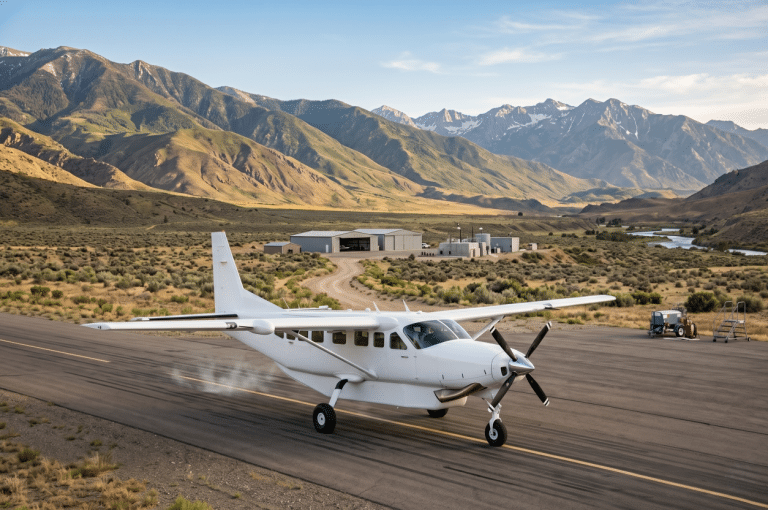
Cessna Grand Caravan EX
With strong payload capability, simple operation, and access to short or rough runways, the Grand Caravan EX is a practical choice for regional private flights, island routes, and utility travel.
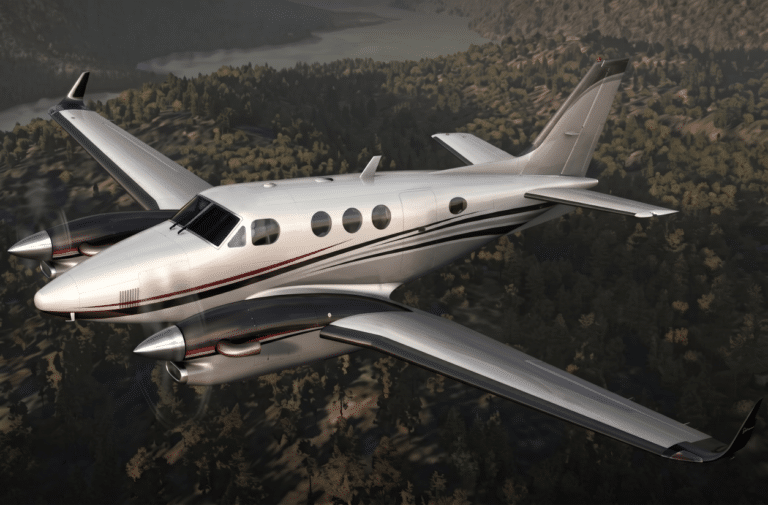
King Air 90
Introduced in 1964 as the first aircraft in what would become the most successful turboprop family in aviation history, the King Air 90 was built on the Queen Air airframe with turboprop engines and a pressurized cabin. Over 20 variants followed across six decades of production. It seats up to six passengers with a range of around 1,000 nautical miles.
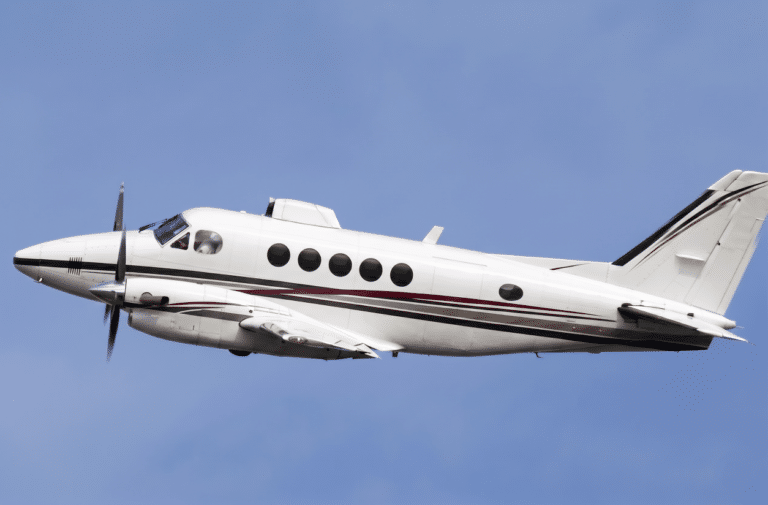
King Air 100
Introduced in 1969 as the first stretched King Air, the Model 100 extended the cabin of the King Air 90 by four feet and fitted a new wing derived from the Model 99 airliner. Three variants followed — the 100, A100, and B100 — each with refinements to engines, propellers, and performance. The aircraft seats up to eight passengers with a range of around 1,325 nautical miles.
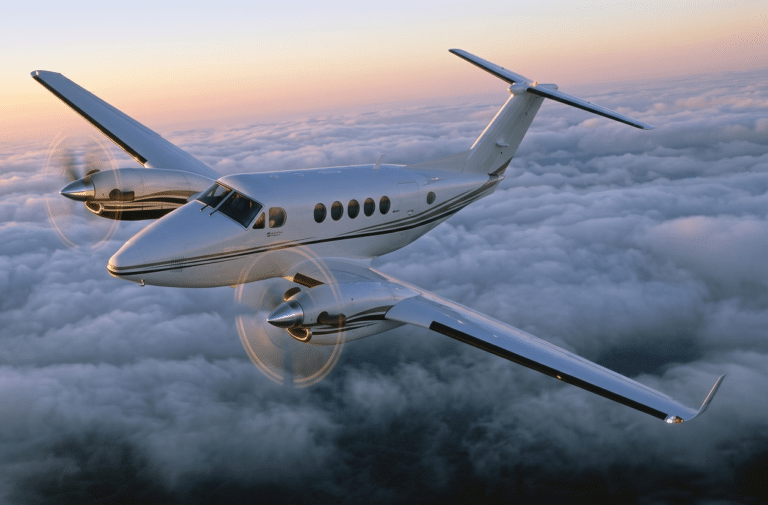
King Air 200
Originally launched as the Super King Air in 1974, the Model 200 brought a new T-tail, longer wingspan, and more powerful engines to the King Air line. The B200 variant followed with even stronger PT6A-42 engines and lower operating costs. Both variants seat up to eight passengers with a range of around 1,750 nautical miles.
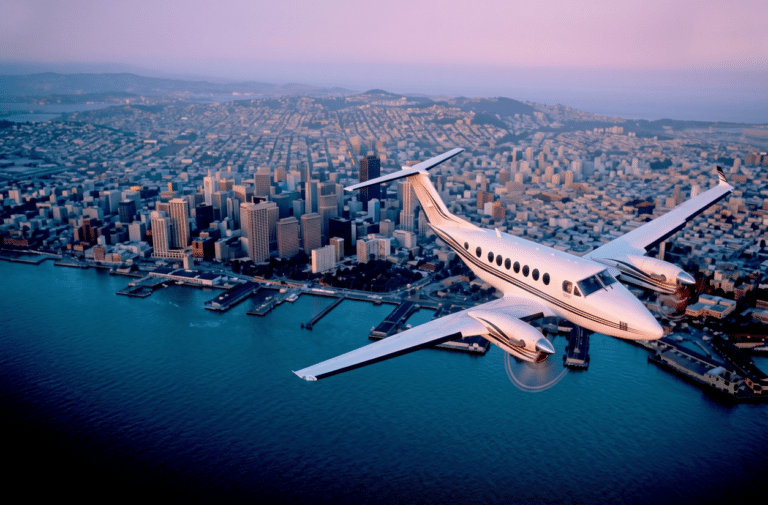
King Air 300 / 350
Entering service in 1984 as a more powerful successor to the 200, the King Air 300 brought stronger PT6A-60A engines and a cleaner airframe. Six years later, a stretched fuselage, winglets, and four extra cabin windows produced the 350. By 2009, the 350i had pushed noise levels and cabin comfort to a point where Beechcraft felt confident comparing them to light jets.
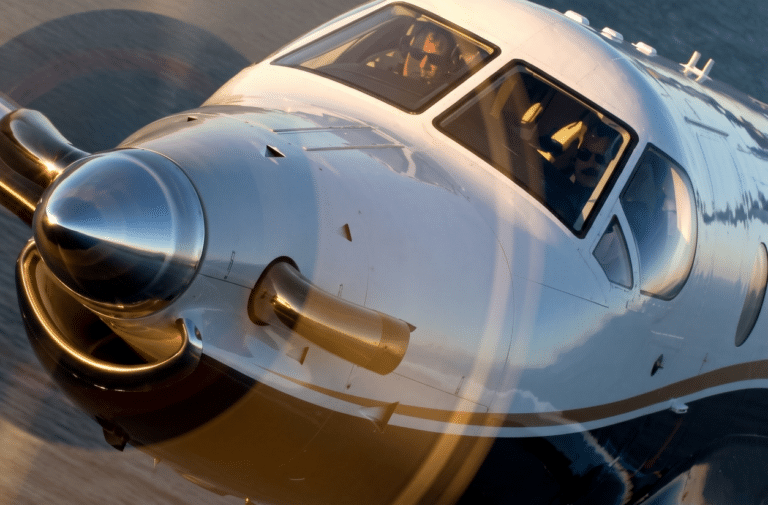
Pilatus PC-12
Built in Switzerland and first delivered in 1994, the Pilatus PC-12 is the world’s best-selling pressurized single-engine turboprop with over 1,750 sold globally. The interior was designed in collaboration with BMW Designworks. It seats up to nine passengers, requires as little as 1,475 feet of runway for takeoff, and carries a range of around 1,800 nautical miles.
What Happens When an Aircraft Just Works
The turboprop’s credibility in private aviation is not theoretical. It is built on a production and operational history that no jet category can match at this level.
Beechcraft introduced the first King Air in 1964. It is still in production today. In the six decades between that first delivery and the current generation, the King Air fleet alone has accumulated more than 60 million flight hours across commercial, military, and private operations in over 130 countries. No other business aircraft platform comes close to that figure. It represents not just longevity but a depth of operational knowledge that feeds directly into reliability.
For passengers, that history translates into something practical. Pilots on King Air airframes tend to have thousands of hours on type. Mechanics know every system. Parts pipelines are mature. When a turbo prop charter is booked through Celebrity Jet Charter, the aircraft showing up has one of the most well-understood maintenance histories in general aviation behind it.
Here is what that experience level looks like in practice:
- Dispatch reliability. Aircraft that have been refined over six decades do not surprise operators. Scheduled maintenance intervals are predictable, and unscheduled issues are rare.
- All-weather capability. Turboprops are built for environments jets avoid. Mountain airports, coastal strips, and high-elevation destinations are routine operations for a well-maintained King Air, not edge cases.
- Pilot familiarity. A type rating on a King Air is one of the most common in business aviation. Experienced pilots are not difficult to find, and their hours on type run deep.
- Luggage and cargo capacity. The cabin floor plan and loading configurations on most turboprops handle oversized bags, sports equipment, and cargo in a way that comparably sized jets cannot.
Celebrity Jet Charter provides turboprop rental options across the full King Air range and the Pilatus PC-12, matched to the route and the group.
Seamless Booking Process

Submit Request

Select Aircraft

Confirm Details

Fly Private