
King Air 300 / 350
Entering service in 1984 as a more powerful successor to the 200, the King Air 300 brought stronger PT6A-60A engines and a cleaner airframe. Six years later, a stretched fuselage, winglets, and four extra cabin windows produced the 350. By 2009, the 350i had pushed noise levels and cabin comfort to a point where Beechcraft felt confident comparing them to light jets.
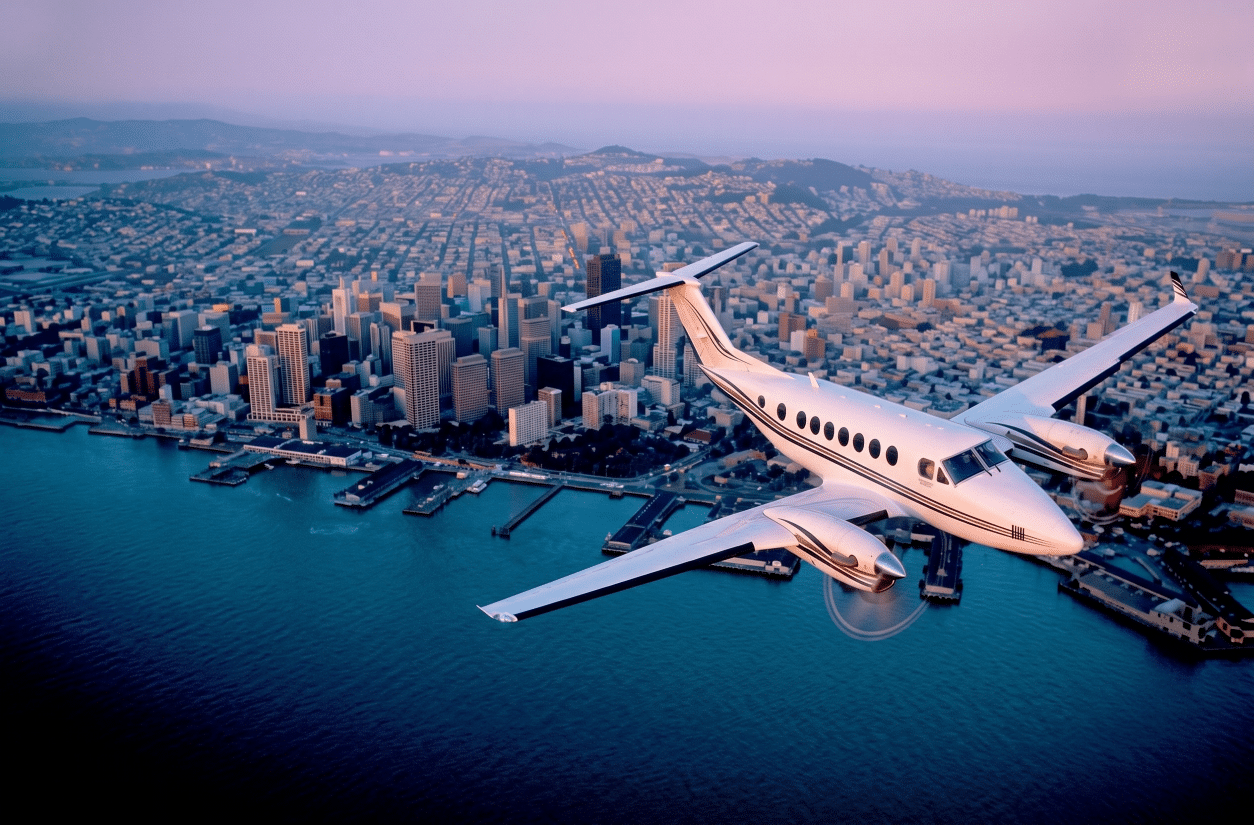
King Air 300 / 350
More Cabin Than Most Passengers Expect
The King Air 350 is regularly compared to light jets — not because it flies like one, but because it carries more passengers in a larger interior at a considerably lower operating cost. Passengers who board a King Air 350 charter for the first time often say the same thing: they did not expect this much room from a turboprop.
That space comes from a deliberate series of expansions across the 300 and 350 series. Starting with the King Air 200 airframe, Beechcraft fitted stronger engines and a cleaner cowling to create the 300, then stretched the fuselage nearly three feet, added winglets, and increased the windows from ten to fourteen to produce the 350 — enough changes to make the interior feel considerably more open than its predecessor. A further refinement in 2009 brought noise levels down to where Beechcraft feels confident comparing them to light jets, along with LED lighting, automatic window shades, and armrest controls for entertainment and cabin management.
The FAA itself operates King Air 300s to carry out accuracy checks on navigational aids across the United States — an endorsement of the platform’s precision and dependability that says more than any specification sheet. For passengers, that track record means an aircraft that operates predictably and arrives when it is supposed to.
A King Air 300 private jet works particularly well for groups flying from Houston to Sarasota, where the destination airport is smaller, the runway is shorter, and the aircraft’s ability to land on strips as compact as 3,300 feet makes the trip direct rather than indirect. For those considering a King Air 350 rental, the stretched cabin and quieter interior make the same case on longer regional legs where the extra comfort genuinely matters. On a leg of that length, the time difference between a turboprop and a comparable jet is around 15 minutes. The cabin, the cost, and the access more than make up for it. Celebrity Jet Charter coordinates aircraft availability and ground logistics to match the route. These aircraft are operated by experienced crews whose knowledge of the King Air platform covers the full range of conditions the series was built to handle.
Manufacturer: Beechcraft
Model: King Air 350
Passengers (Typical): 9
Passengers (Max): 9
Pilots: 2
Range: 2182 nm
High Speed Cruise: 279 mph
Cabin Length: 19.60 ft.
Cabin Width: 4.6 ft.
Cabin Height: 4.9 ft.
Baggage Capacity (Interior): 0 cu ft.
Baggage Capacity (Exterior): 67 cu ft.
Max Takeoff Weight: 15,000 lbs
Service Ceiling: 35,000 ft.
Landing Distance: 4,140 ft.
Number Built: 917
Year Started: 1985
Year Ended: 0

Turbo Prop Jets
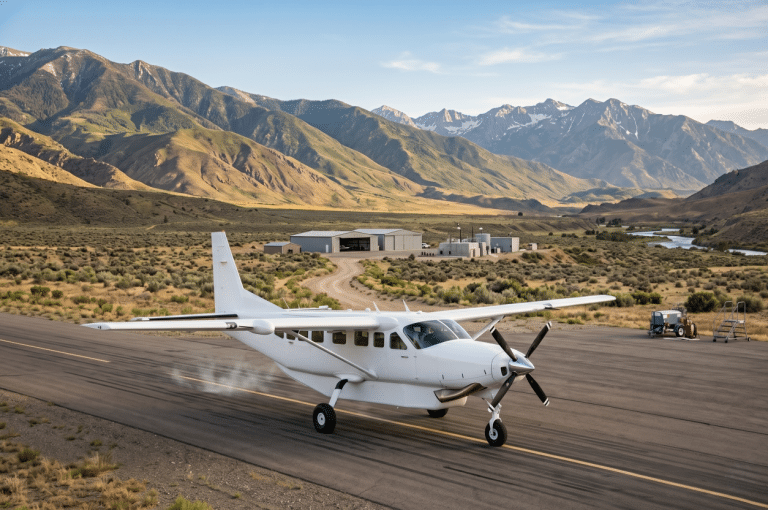
Cessna Grand Caravan EX
With strong payload capability, simple operation, and access to short or rough runways, the Grand Caravan EX is a practical choice for regional private flights, island routes, and utility travel.
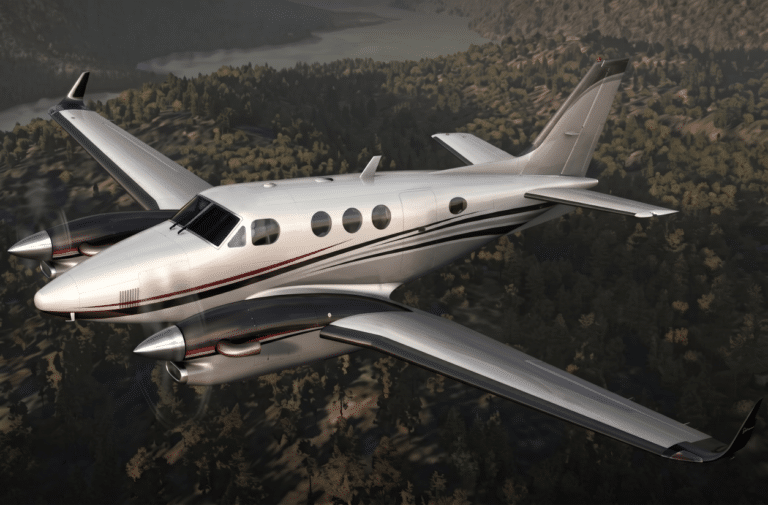
King Air 90
Introduced in 1964 as the first aircraft in what would become the most successful turboprop family in aviation history, the King Air 90 was built on the Queen Air airframe with turboprop engines and a pressurized cabin. Over 20 variants followed across six decades of production. It seats up to six passengers with a range of around 1,000 nautical miles.
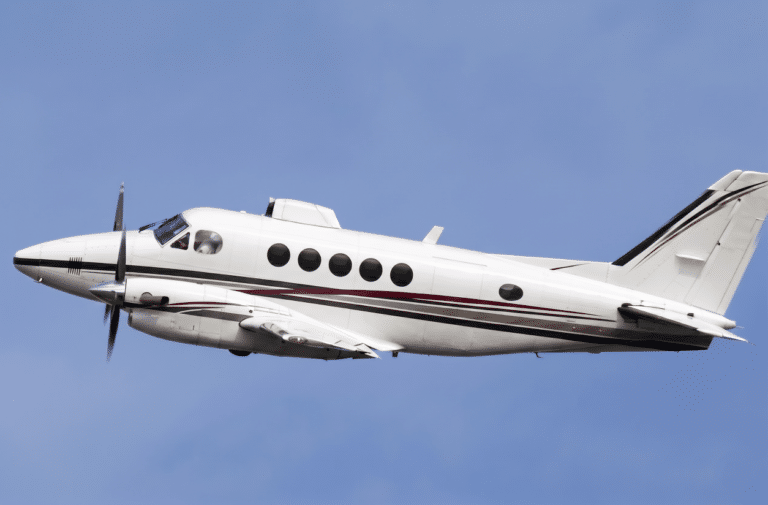
King Air 100
Introduced in 1969 as the first stretched King Air, the Model 100 extended the cabin of the King Air 90 by four feet and fitted a new wing derived from the Model 99 airliner. Three variants followed — the 100, A100, and B100 — each with refinements to engines, propellers, and performance. The aircraft seats up to eight passengers with a range of around 1,325 nautical miles.
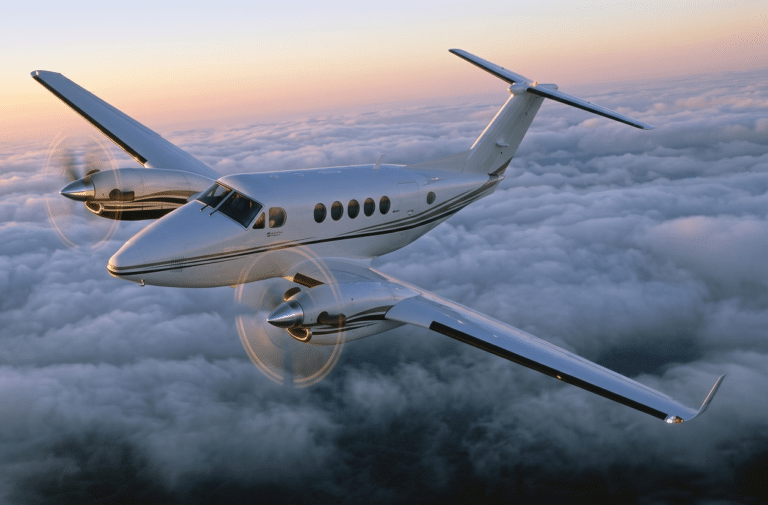
King Air 200
Originally launched as the Super King Air in 1974, the Model 200 brought a new T-tail, longer wingspan, and more powerful engines to the King Air line. The B200 variant followed with even stronger PT6A-42 engines and lower operating costs. Both variants seat up to eight passengers with a range of around 1,750 nautical miles.
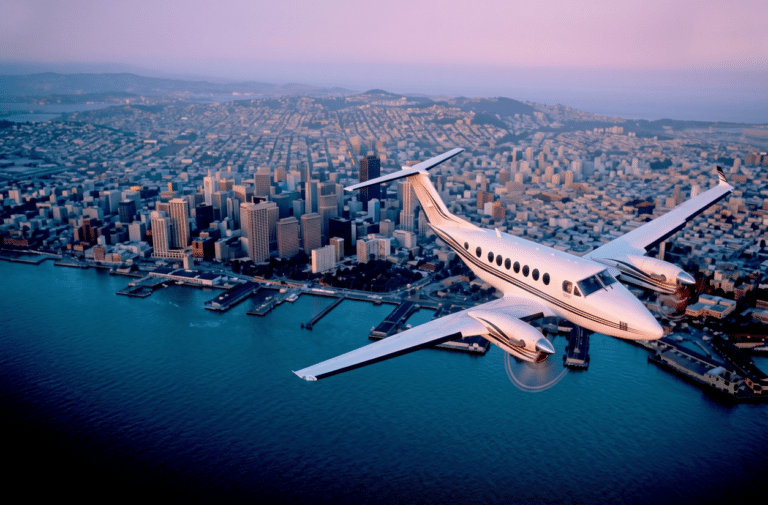
King Air 300 / 350
Entering service in 1984 as a more powerful successor to the 200, the King Air 300 brought stronger PT6A-60A engines and a cleaner airframe. Six years later, a stretched fuselage, winglets, and four extra cabin windows produced the 350. By 2009, the 350i had pushed noise levels and cabin comfort to a point where Beechcraft felt confident comparing them to light jets.
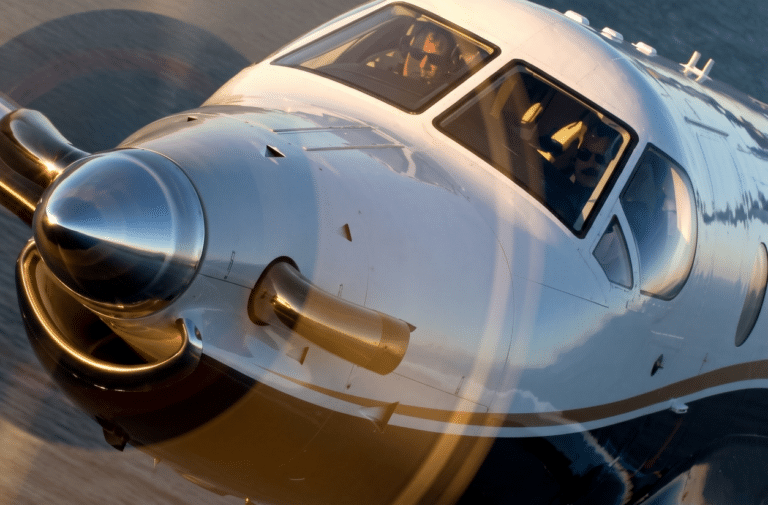
Pilatus PC-12
Built in Switzerland and first delivered in 1994, the Pilatus PC-12 is the world’s best-selling pressurized single-engine turboprop with over 1,750 sold globally. The interior was designed in collaboration with BMW Designworks. It seats up to nine passengers, requires as little as 1,475 feet of runway for takeoff, and carries a range of around 1,800 nautical miles.
Seamless Booking Process

Submit Request

Select Aircraft

Confirm Details

Fly Private